
Green Kitchen Inspo for Every Shade
You’ve been saving green kitchen photos for months without picking a shade.
Every one looks right in the photo, but you can’t tell how it’ll feel under your own lighting, every day, for years.
Green isn’t a single colour decision. It runs from a barely-there sage to a near-black forest shade, and which end you land on changes the whole feel of the kitchen.
This guide walks through what actually gets wrapped in green, what pairs with it, and how to reach that finish without replacing sound cabinets.
Why green keeps earning a place in kitchen design – By new kitchen professionals in Glasgow
A green kitchen brings a touch of nature into an otherwise hard-edged interior. These green tones, from a soft sage to a deep verdant shade, all echo something you’d find outside.
Green also complements the materials already doing most of the work in a kitchen.
Wood, stone worktops and brass hardware all carry earthy, natural tones and a similar hue. A green cabinet run suits those materials, rather than standing apart from them.
Green earns its timeless label from what it’s paired with, not the colour alone.
Warm neutrals come and go with the decade, but green holds its place because the materials around it never really go out of fashion.
The green shade spectrum, from sage to forest
Shade choice sets the whole mood of a green kitchen: pale and airy, or deep and dramatic. The gap between a pale sage and a near-black forest green is wide.
It’s closer to the gap between two different colours than two shades of one.
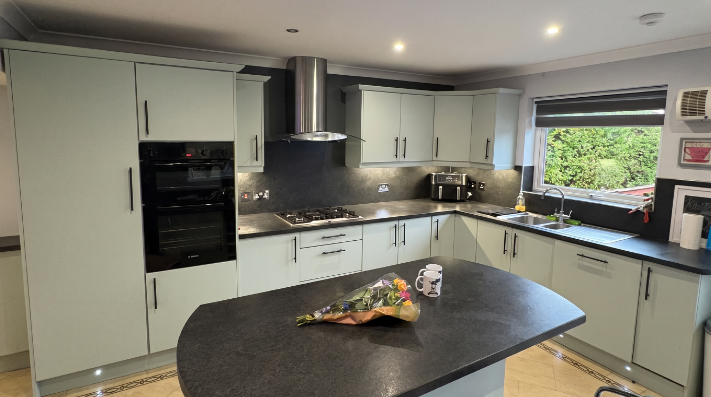
Sage and other light greens
Sage sits at the lightest end of the green spectrum. It feels calm and airy rather than dramatic, and it works whether your kitchen faces north with limited natural light, or floods with afternoon sun.
A sage green kitchen also complements almost anything you put next to it: pale oak, white marble, black hardware, brass hardware.
It suits a farmhouse kitchen just as well as a sleek, contemporary look. That’s exactly why it’s the safest starting point if you’re not sure which shade suits your space.
Mint green
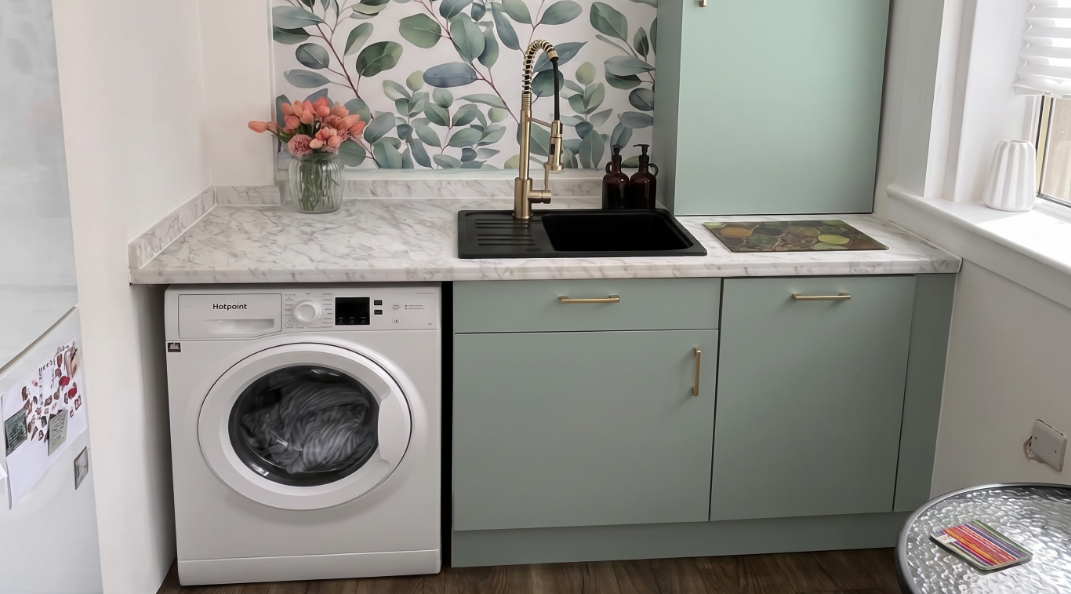
Mint green takes things up a notch, with a cool and refreshing minty colour that gives a kitchen a playful feel.
It leans brighter and cooler, with a touch of blue in the mix.
Olive and moss, the earthy middle ground
Olive and moss sit between sage and the darker end of the spectrum, and they feel warmer and more grounded than either.
Where sage can lean slightly cool, olive pulls the eye toward wood tones and natural light instead.

Bottle, forest and other dark green kitchens
Bottle and forest green sit at the deepest end of the spectrum. Both carry a timeless elegance that suits a period kitchen as well as a new one.
Both work best against brass or black accents, with enough natural light in the room to stop it feeling closed in.
A dark green island against paler cabinets does the job on its own. It becomes a genuine focal point, and the rest of the room can stay a lighter shade.
Full dark green runs work best in an open-plan kitchen, where there’s room to step back and see the whole colour at once.

What can get wrapped in green
Kitchen cabinets carry most of a green kitchen’s colour, through their doors and drawer fronts, and they’re the obvious place to start.
Whether you’re drawn to shaker kitchens or a handleless style, both take a green finish without losing the kitchen features that make the style work.
A kitchen island is often the better first move if a full green kitchen feels like too big a change straight away.
Wrapping just the island in a deep green, while keeping the surrounding cabinets pale, adds one strong colour moment. The rest of the room stays neutral.
Worktops (or countertops, depending which term you grew up with) and splashbacks extend the same colour and finish across the surfaces you use. The kitchen then reads as one designed scheme, rather than a green cabinet run sitting next to whatever worktop was already there.
Kitchen units, drawer fronts and even fitted wardrobes and other furniture in an adjoining utility space can all take the same treatment.
So long as the surface is solid, we can wrap it.
What to pair with a green kitchen
Certain materials and kitchen colour combinations make green cabinets work harder than others, whichever shade you land on.
Hardware and worktops
A brass fixture pairs naturally with green: the warmth in the metal avoids the coldness a chrome handle can bring to a dark colour scheme.
Black accents do a similar job on a lighter sage kitchen. They add contrast without overpowering the green.
Timber and stone worktops give green a harmonious, natural texture to sit against, rather than a glossy, synthetic one. A textured stone-effect surface, in particular, gives a green kitchen a natural backdrop that suits the colour.

Flooring, walls and going two-tone
Flooring and tiles work best kept simple. A warm timber floor or a stone-effect tile keeps the cabinetry as the focal point, not a busy pattern underfoot.
The same logic applies to walls, where a soft, off-white or warm neutral tone gives green cabinetry room to be the statement.
A two-tone green kitchen pairs a darker base with a lighter wall unit or island. It’s worth considering if you’re unsure about a single shade running through the whole kitchen.
You get the depth of a dark green, without the whole room disappearing into it.
Getting a green kitchen without a full renovation
None of these design ideas require new carcasses, a new kitchen layout, or extra kitchen space, if your existing cabinets are still sound.
We change the colour and finish of your existing cabinets, island and worktop through kitchen wrapping.
There’s no showroom design service to sit through, just a free survey at your kitchen.
A DIY green paint job on kitchen cabinetry chips at the edges within months, particularly around handles and hinges that get touched every day.
A professionally applied wrap is built to withstand that daily contact. It holds up to the heat and steam a working kitchen produces too, for years rather than months.
Cupboard and worktop wrapping can be paired with a splashback in the same finish, so cabinets, worktop and splashback all match.
Wrap Wizard works from a full range of colours and finishes, covering every shade in the spectrum above.
Green kitchen inspiration: questions answered
Is a green kitchen a good idea?
Yes. The colour pairs naturally with wood, stone and brass, materials that don’t go out of style. A green kitchen doesn’t fade the way a single-season trend colour does, and it works in both traditional and contemporary kitchen styles.
What colour goes with a green kitchen?
Green kitchen colour choices come down to what surrounds them just as much as the shade itself. Brass and black hardware both work well with green kitchen cabinets, along with timber and stone-effect worktops.
For walls and flooring, a warm neutral or off-white tone lets the cabinetry stay the focal point of the room.
What shade of green is most popular right now?
Sage suits the widest range of kitchens and lighting conditions, which is why we’re asked for it more than any other shade. Dark and forest green follow close behind, particularly for kitchen islands rather than a full cabinet run.
Can a green kitchen use two shades?
Yes. A two-tone scheme usually puts the darker green on the base cabinets or the island, with a lighter shade on the wall units above. That split is the easiest way to try a dark green kitchen without it dominating the whole room.
Bring your green kitchen idea to Wrap Wizard
Whichever shade caught your eye in your green kitchen inspiration folder, sage, olive, mint, bottle or forest, get in touch for a free survey.
We’ll give you an honest answer on how it’ll look on your kitchen, and match a finish to the kitchen you’ve already got.